
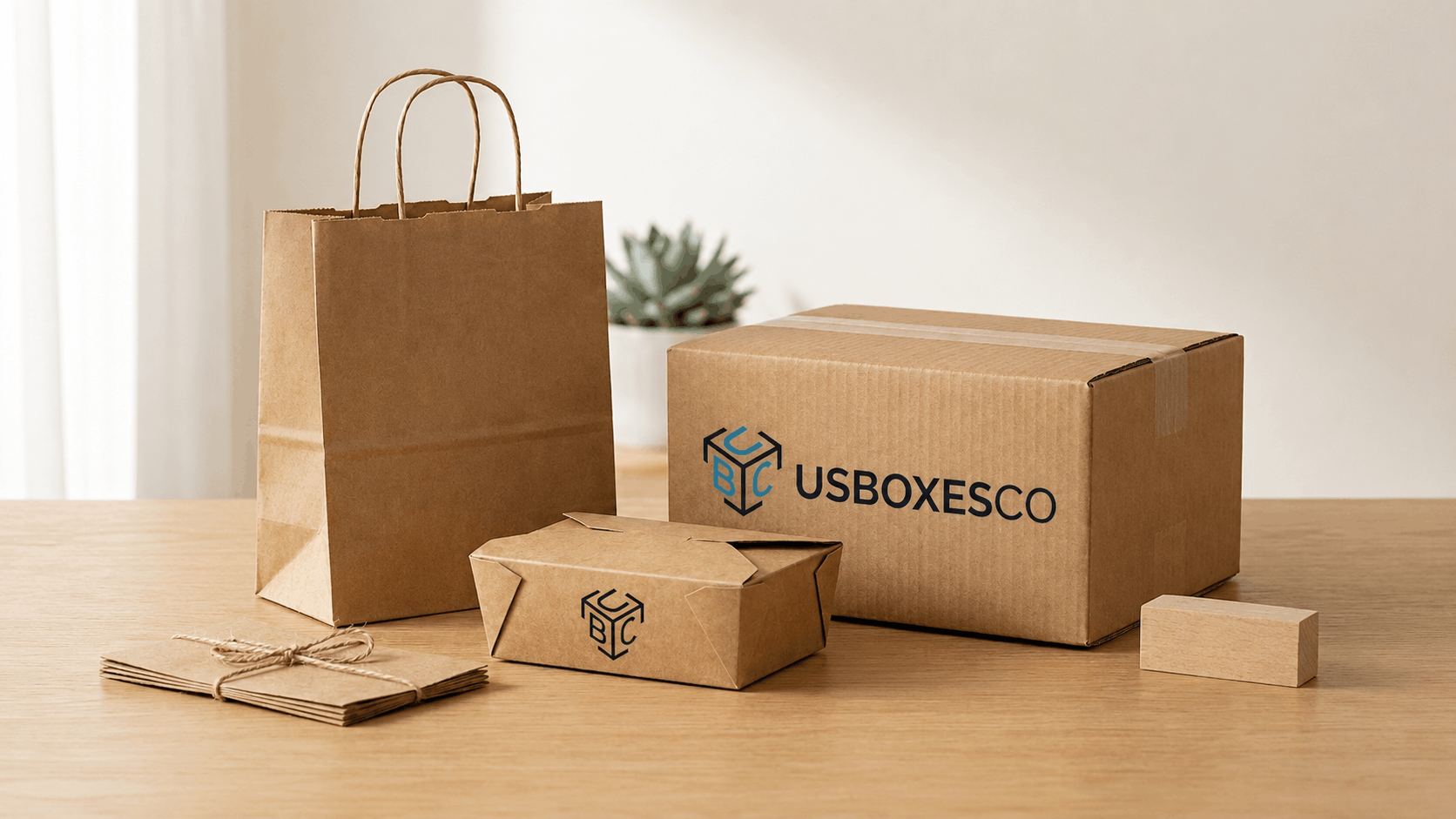
What Is Kraft Paper? Types, Uses, and Why Packaging Runs on It
What Is Kraft Paper
Kraft paper is paper produced through the kraft process, a chemical pulping method that cooks wood chips in a hot solution of sodium hydroxide and sodium sulfide. That cooking step dissolves most of the lignin, the natural glue that binds wood fibers together, while leaving the cellulose fibers long and intact.
Those long, undamaged fibers are the whole point. They interlock into a sheet with higher tensile strength, tear resistance, and burst strength than paper made by mechanical pulping or the older sulfite process. The name says it plainly: "kraft" is the German word for strength.
A few quick facts to anchor things:
-
Invented in 1879 by Carl F. Dahl, a German chemist, who patented the process in 1884. The first kraft mill started running in Sweden in 1890.
-
Made mostly from softwood like pine and spruce, because softwoods have longer fibers than hardwoods, and longer fibers mean stronger paper.
-
Naturally brown in its unbleached form. The color comes from the residual lignin left in the pulp. Bleach it and you get white kraft, which trades a little strength for a clean print surface.
-
Recyclable and biodegradable when uncoated, which is a big part of why brands keep switching to it.
The kraft process is also called the sulfate process, and today it produces the large majority of the world's paper pulp. If you're reading specs from a paper mill and you see "sulfate paper," it's the same thing.
The Background of Kraft Paper
Before kraft, the dominant chemical pulping method was the sulfite process. It made decent paper, but it weakened the fibers and it only worked well on certain wood species. Dahl's discovery was that swapping in sodium sulfide during cooking produced a darker, far stronger pulp from almost any wood, including the resinous pines that sulfite mills couldn't handle.
That changed where mills could be built and what paper could do. By the early 1900s, kraft mills were spreading across Scandinavia and the southern United States, where fast-growing pine made the economics work. Another advantage sealed the deal: the kraft process recovers and reuses about 95 percent of its cooking chemicals, so mills run cheaper and cleaner than sulfite mills ever could.
One more note on the word "background," because it comes up in two ways. People also search for a kraft paper background in the visual sense, meaning the warm brown texture used in product photography, gift wrap, craft projects, and website design. That rustic, natural look is now a branding shorthand for handmade and eco-friendly, which is exactly why so many businesses want their boxes in plain brown kraft instead of glossy white.
How Kraft Paper Is Made, Step by Step
The process hasn't changed much in principle since 1884. Here's the short version of what happens at a mill:
-
Chipping. Logs are debarked and cut into chips about the size of a matchbook.
-
Cooking. The chips go into a pressurized digester with white liquor (the sodium hydroxide and sodium sulfide mix) at roughly 170°C. Over a few hours the lignin dissolves and the cellulose fibers separate.
-
Washing and screening. The pulp is washed to pull out the spent chemicals and dissolved lignin, then screened for knots and uncooked bits.
-
Bleaching (optional). Unbleached pulp stays brown and goes straight to the paper machine. Bleached pulp gets treated, usually with oxygen and chlorine dioxide, to produce white kraft.
-
Sheet forming. The pulp is sprayed onto a moving wire mesh, pressed, dried, and wound into enormous rolls. From there it's slit into kraft paper rolls and sheets in whatever width and weight a converter orders.
The spent cooking liquor, called black liquor, gets burned in a recovery boiler. That regenerates the chemicals and generates power for the mill at the same time, which is why kraft mills can run largely on their own byproducts.
Types of Kraft Paper
"Kraft paper" covers a family of grades, and ordering the wrong one is an easy mistake. These are the ones that matter for packaging:
Natural Brown Kraft
Unbleached, virgin fiber, maximum strength. This is the classic brown paper used for grocery bags, wrapping, void fill, and the rustic look brands love. If strength per gram is the priority, this is the grade.
Bleached White Kraft
Same process, but the pulp is bleached. You lose a small amount of strength and gain a bright white surface that prints clean, accurate color. Common for retail packaging, white bags, and food cartons where the design needs to pop.
Recycled Kraft
Made partly or fully from recovered fiber. Every time paper is recycled the fibers get shorter, so recycled kraft is weaker than virgin kraft at the same weight. It's the right call when sustainability messaging matters more than raw strength, and it's usually cheaper.
Sack Kraft
A high-elasticity, high-tear-strength grade built for multiwall paper sacks. This is what cement bags, flour sacks, and pet food bags are made from. It's engineered to survive being filled fast and dropped hard.
Kraft Linerboard
The flat facing layers of corrugated board. When you order corrugated boxes or shipping boxes, the smooth brown surfaces on the outside and inside are kraft linerboard glued to a fluted medium between them. Most of the kraft paper produced worldwide ends up here.
Coated and Specialty Kraft
Polyethylene-coated kraft for moisture barriers, wax-coated kraft for food wrap, gummed kraft for water-activated packing tape, black and colored kraft for premium presentation, and insulating kraft used inside transformers and cables. Same base paper, different finishing.
Kraft Paper Weights: A Quick GSM Guide
Kraft paper is sold by grammage, measured in grams per square meter (GSM). In the US you'll also see basis weight in pounds. Rough guide:
For reference, ordinary printer paper sits around 80 GSM. A typical kraft folding carton runs 250 to 350 GSM, and the linerboard on a shipping box is usually in the 125 to 200 GSM range per liner before the fluting is added.
What Is Kraft Paper Used For
The honest answer is almost everything in packaging, but here's where it shows up most:
Corrugated and shipping boxes. Kraft linerboard is the backbone of nearly every cardboard box on earth. Its burst and stacking strength is why a brown box can hold 40 pounds of product through a cross-country trip.
Paper bags. From thin grocery sacks to heavy multiwall cement bags, the tear resistance of kraft is what keeps a loaded bag from splitting at the handles.
Retail and food packaging. Virgin kraft can be produced food grade, which makes it standard for bakery boxes, take away boxes, sandwich wrap, and butcher paper. Unbleached food-grade kraft also signals "natural" to customers, which is half the reason cafes and bakeries choose it.
Custom branded boxes. Brown kraft prints beautifully with one or two ink colors, and the contrast of dark ink on natural brown is a look customers now associate with quality and sustainability. Kraft soap boxes and cosmetic cartons lean on this constantly.
Void fill and protective wrap. Crumpled kraft paper has largely replaced plastic air pillows in e-commerce packing because it cushions well and goes straight into the recycling bin.
Industrial uses. Gummed packing tape, paper cores, dunnage, floor protection on construction sites, and electrical insulation paper.
Crafts and photography. Backdrops, gift wrap, sketching paper, table runners. That kraft paper background look again.
Is Kraft Paper Waterproof?
No. Plain kraft paper is not waterproof, and anyone telling you otherwise is selling something.
Kraft is still paper, which means it's made of cellulose fibers, and cellulose absorbs water. What kraft does have is better moisture resistance than ordinary paper. The dense, tightly bonded long fibers slow water down, so a few drops or brief humidity won't destroy it the way they'd wreck newsprint. It buys you minutes, not hours.
If your product needs real water protection, you have options, all of which we can build into a custom box:
-
Polyethylene (PE) coating: A thin plastic layer laminated onto the kraft. This is how milk cartons and frozen food packaging work. Strong barrier, but it complicates recycling.
-
Wax coating: Traditional for produce boxes and food wrap. Good water hold-out, also harder to recycle.
-
Wet-strength additives: Resins added at the mill so the paper keeps 20 to 40 percent of its strength even when soaked. The paper still gets wet, it just doesn't fall apart.
-
Aqueous and barrier coatings: Newer water-based coatings that resist moisture and grease while keeping the box recyclable. Usually the best compromise for food packaging today.
-
Lamination or varnish: For retail boxes that need to shrug off light splashes and handling, a matte or gloss lamination over printed kraft does the job.
So the practical rule: uncoated kraft for dry goods, coated or treated kraft for anything that will meet moisture, grease, or refrigeration.
Kraft Paper vs. Regular Paper
A quick side-by-side, because the difference matters when you're paying for packaging:
The short version: regular paper is optimized for smoothness and printability, kraft is optimized for strength. Packaging cares about strength first, which is why kraft owns the category.
Is Kraft Paper Eco-Friendly?
Mostly yes, with the usual fine print.
Uncoated kraft paper is recyclable in standard curbside programs, biodegradable, and compostable. Unbleached kraft skips the bleaching chemicals entirely. The kraft process itself recovers nearly all of its cooking chemicals, and most large mills source wood from certified managed forests under FSC or SFI programs. Recycled kraft pushes the footprint down further.
The fine print: PE-coated and wax-coated kraft is much harder to recycle, and any paper product still consumes water and energy to make. If sustainability is part of your brand story, the strongest position is uncoated or aqueous-coated kraft with recycled content, and we can spec that for you.
Kraft Paper for Packaging: What to Specify When You Order
If you're moving from "what is kraft paper" to "I need kraft packaging," these are the decisions that shape your quote:
-
Grade: Virgin brown, bleached white, or recycled. Virgin for strength and food contact, white for full-color print, recycled for the sustainability story.
-
Weight: Give us the product weight and how it ships, and we'll recommend a GSM or board grade. Heavier isn't always better, it's just heavier and more expensive.
-
Coating: None for dry goods, barrier coating for food or moisture exposure.
-
Print: Dark inks on brown kraft look sharp and cost less than full coverage. White ink on kraft is striking but needs the right press setup. Full CMYK belongs on white kraft.
-
Structure: Folding carton, mailer box, corrugated shipper, or a tuck end box. The same kraft stock behaves differently in each, and your dimensions should follow the structure, not the other way around. If you haven't sized your product yet, our guide on how to measure a box walks through it.
Final Thoughts
Kraft paper earned its name. A 140-year-old process, long softwood fibers, and a recovery cycle that keeps costs down made it the default material for boxes, bags, and board across the entire packaging industry. It's strong, it's recyclable, it prints well, and customers already trust the way it looks.
If you're thinking about custom kraft packaging for your product, whether that's a printed kraft mailer, a food-safe carton, or a full corrugated shipper, request a custom quote and tell us what you're shipping. We work with kraft stocks every day, we'll recommend the right grade and weight for your product, and we'd rather get the spec right at the quote stage than after the press run. You can also reach us directly at sales@usboxesco.com.